Building America's First Catastrophe Bond ETF

Vijay Manghnani, co-founder of King Ridge Capital Advisors, LLC (sub-adviser to the Brookmont Catastrophe Bond ETF, NYSE: ILS), recently joined Ben Webster on the Scaling Alpha podcast to talk through his path from meteorology to catastrophe risk investing, and what makes insurance-linked securities a distinct addition to a diversified portfolio. Below is an edited Q&A drawn from that conversation.

A Conversation with Vijay Manghnani, King Ridge Capital Advisors


Tell us a bit about yourself and your journey into the financial industry.

Vijay Manghnani: I have a PhD in meteorology, so my background is really in science and engineering. As I was finishing my PhD at NC State, I wanted to work on real-world applications of the science rather than stay purely academic. Around that time, an asset class was emerging called weather derivatives — essentially an intersection of weather risk and financial derivatives. That combination of the science I was passionate about and the finance world was fascinating to me, and it's what pulled me into the industry.


For anyone unfamiliar, what is a derivative, and what problem were weather derivatives solving?

Vijay: A derivative is an instrument like an option — it's called that because the underlying index could be a stock, a bond, or in this case a weather parameter like temperature. You're not trading the underlying itself; you're trading a contract derived from it. Weather derivatives emerged because energy utilities were getting hurt by weather volatility — a series of warm winters meant less demand for gas, and that hit their bottom lines. The simplest hedge was a weather derivative that would protect them in a warm winter or a cool summer. On the other side of those trades were energy trading companies acting as sophisticated speculators, along with insurance and reinsurance companies whose core business is taking risk off other parties' books and distributing it to capital markets.


Where did your career take you after your PhD?

Vijay: I packed up and drove to Kansas City to take a job as a climatologist at an energy trading firm — probably the first climatologist they'd ever hired. My first task was building a seasonal climate outlook for commodity traders who'd bet, and sometimes lost, tens of millions of dollars based on my forecasts. It was a steep learning curve, but it's what got me hooked on finance. My niche ended up being subseasonal forecasting — two weeks to a couple of months out, rather than short-term weather calls. After Enron collapsed and a lot of energy trading firms pulled back, I moved to a reinsurance firm, and that's where catastrophe risk — hurricanes, floods, and similar extreme events — became a much bigger focus than weather alone.


What came next?

Vijay: I joined Chubb for about eight years to start a weather derivatives desk and manage catastrophe risk more broadly. We built parametric risk-transfer products — for example, hurricane products for hotels and small businesses along the coastline. A parametric product triggers based on a defined parameter from an independent agency, like the National Hurricane Center confirming a hurricane made landfall at a certain category and location, rather than on an assessment of actual damages. From there I joined AIG in 2012, right as they were rebuilding after 2008. I helped build their global catastrophe modeling operation essentially from scratch — from almost nothing to a few hundred analytic staff supporting a multi-billion dollar book of business.


And that eventually led to PIMCO?

Vijay: Right — a few of us who'd worked together in the industry were looking to start something like King Ridge, and we ended up in conversations with PIMCO about building their insurance-linked securities platform. We joined in 2019 and stayed through the end of 2023. Starting a brand-new asset class desk inside a large firm is almost like running a startup — there was no institutional knowledge of ILS there, so a lot of our early work was education: investment committee meetings, explaining the opportunity in insurance and reinsurance. We launched Newport Re, a reinsurance company out of Bermuda, and two private ILS hedge funds, and also served as the specialist desk underwriting ILS and cat bond transactions for the broader PIMCO complex.


Let's talk about King Ridge. For someone completely new to this, what do you actually do day to day?

Vijay: It's a niche domain that requires two things: a solid scientific understanding of catastrophe risk — since that's the underlying risk you're assuming — and a strong grasp of how the insurance and reinsurance industry works, since those are typically your key counterparties. On the risk side, we're talking about hurricanes, hailstorms, wildfires, floods, typhoons, and geophysical events like earthquakes. Insurance companies take on that risk when they write policies — say, homeowners' hurricane risk in Florida — and regulators limit how much of that concentrated, single-event risk they can retain on their own balance sheets. So insurers and reinsurers pass some of it on to capital markets through instruments like catastrophe bonds.


So walk me through the flow: a company wants to offload risk, and eventually that becomes a bond someone like King Ridge can buy?

Vijay: That's right. Insurance and reinsurance companies package that risk — not at the level of an individual underlying policyholder, but aggregated, often down to the county level — into an instrument the market can buy. What separates a strong manager in this space isn't arbitrage; the cat bond market isn't liquid enough for that, and it's a bond, not an equity. It's really about constructing a higher-quality portfolio: avoiding the weakest bonds in the universe, and balancing the coupon income against the risk you're taking on. That requires being genuinely good at the underlying climate and catastrophe science.


Given the market isn't highly liquid, is this mostly a buy-and-hold strategy?

Vijay: The catastrophe bond market itself is made up of 144A securities issued to qualified institutional buyers, and there is a fair amount of trading — we trade in and out fairly often. The private ILS market is a different story; funds there typically have a one-year lockup. The liquidity that does exist in the cat bond market is what allows us to offer the ETFs we run — we manage the portfolio so we can meet creates and redeems as they happen, and because it's an ETF structure, investors can trade intraday with daily liquidity.


How many ETFs do you have, and what are they?

Vijay: We have two. Our U.S. ETF launched in April 2025, during a period of significant market volatility. Catastrophe bonds historically have exhibited low correlation to traditional equity and fixed-income markets, although correlations can change over time and diversification does not ensure against loss. Early this year we launched a set of European ETFs — listed in London, Frankfurt, and Milan — a UCITS structure that's a similar concept and product, but built for European investors.


You must be sitting on an enormous amount of data. How do you manage that, and how is AI changing the way risk gets underwritten?

Vijay: We're definitely in a data-heavy environment — there are hundreds of years of historical record and a global footprint of disasters to monitor, assess, and model. We use catastrophe risk models built by established vendors with decades of development behind them as our benchmark, and we build stochastic scenarios with tens of thousands of potential outcomes across geography and footprint. A lot of these models have used machine learning for a long time, well before “AI” became the popular term. What's new and compelling is generative AI's potential to make these models more granular and to sharpen real-time response when an event is actually approaching, so we can decide whether to hedge or adjust the portfolio. Newer AI-based weather forecasting models have also demonstrated the potential to improve forecast accuracy and resolution. That said, we think about AI pragmatically — we lean on it heavily for analytics and workflow efficiency, but given our fiduciary responsibilities, we don't use it for investment decision-making. There are nuances there we don't think the technology is ready to own.


Beyond forecasting the event itself, how do you figure out which of your holdings are actually exposed when something happens?

Vijay: Insurance companies issue these bonds at the portfolio level, not tied to an individual policyholder, but they do aggregate and share exposure data — typically down to the county or town level. So when a major event is brewing, we convene what we've come to call our major event task force — it's almost a war-room situation, working through what's exposed, which instruments carry that exposure, and how it's likely to affect valuations.


You clearly have deep experience in this space. Beyond that experience itself, what's King Ridge's edge, and what should listeners take away about the firm?

Vijay: A lot of it comes from having been through multiple firms, multiple catastrophes, and multiple market cycles — this industry runs on institutional memory. You get a real sense of what works, what doesn't, and who made the right calls versus the wrong ones when it mattered. Our goal is to innovate in how we design products and run our workflow, but we're operating in an industry with a long history, and we take that history seriously. We manage conservatively, and we take our fiduciary responsibility very seriously.


Let's talk about your clientele. Who's actually buying these ETFs — individuals, RIAs, institutions?

Vijay: It's a mix. Of course it's open and available to retail investors — anybody can buy it through a brokerage account. But the biggest traction we're seeing is from institutions and RIAs managing assets on behalf of clients, particularly those who want daily liquidity and daily pricing on what they hold. We're seeing interest from a broad range of institutional managers and RIAs seeking a historically differentiated return stream with low correlation to traditional asset classes.


What makes that uncorrelated positioning so attractive in a typical institutional or RIA portfolio?

Vijay: Every institutional investor or RIA is trying to build a diversified portfolio — equities, fixed income, some alternatives — and we sit in that fixed income/alternatives bucket. Historically, catastrophe bonds have exhibited low correlation to traditional equity and fixed-income markets because their primary return drivers are insured catastrophe events and the reinsurance cycle rather than corporate credit or economic growth. That historical relationship can change, particularly during periods of market stress, and diversification does not ensure against loss. Over the long term, catastrophe bonds have also historically offered income that can be competitive with traditional fixed-income and high-yield markets, although relative yields and returns vary over time with market conditions and the reinsurance cycle. Past performance is not indicative of future results.


How would someone find and invest in these ETFs?

Vijay: Our US ETF ticker is ILS — short for insurance-linked securities. The European UCITS ETF is CATB, as in cat bond. Both are available through any standard brokerage account. We also have websites for each, and you can find links to both from kingridgecapital.com, along with FAQs and white papers if you want to dig deeper into the strategy.


Any closing thoughts?

Vijay: Just that this is a genuinely different way to build a portfolio — it's not another long-short strategy, and you don't have to dig too deeply to see how it's differentiated. I appreciate the conversation, Ben, and I'd be glad to come back sometime.


See How Cat Bonds Fit Into a Modern Portfolio

Daily liquidity can make catastrophe bonds more accessible to investors seeking to diversify traditional stock-and-bond portfolios. Catastrophe bonds historically have exhibited low correlation to traditional asset classes, although correlations can change and diversification does not ensure against loss.


Download The Diversification Case for CAT Bonds: 20 Years of Low-Correlation Returns.


Disclosure

This material is provided for informational and educational purposes only and does not constitute investment advice, a recommendation, or an offer or solicitation to buy or sell any security or investment product, including the Brookmont Catastrophic Bond ETF (NYSE: ILS) or the CATB Cat Bond UCITS ETF.

The discussion and commentary in this article and the accompanying video reflect the views of the speaker as of the date of recording and are subject to change without notice. References to particular investment products are provided for informational purposes only and should not be construed as a recommendation or investment advice.

Past performance is not indicative of future results. All investing involves risk, including the possible loss of principal. Catastrophe bonds and insurance-linked securities involve risks including exposure to insured catastrophic events, model and estimation uncertainty, valuation uncertainty following loss events, structural complexity, and periods of reduced liquidity. Capital is at risk. Historical characteristics and comparisons referenced above may be based on third-party index data and are not guarantees of future results.

King Ridge Capital Advisors, LLC serves as sub-adviser to the Brookmont Catastrophic Bond ETF and as portfolio manager to the CATB Cat Bond UCITS ETF. Information is believed to be reliable but is not guaranteed as to accuracy or completeness.
 

blogHeaderImage
July 20, 2026

Building America's First Catastrophe Bond ETF

Blog Summary

Quick overview of the article

Vijay Manghnani, co-founder of King Ridge Capital Advisors, LLC (sub-adviser to the Brookmont Catastrophe Bond ETF, NYSE: ILS), recently joined Ben Webster on the Scaling Alpha podcast to talk through his path from meteorology to catastrophe risk investing, and what makes insurance-linked securities a distinct addition to a diversified portfolio. Below is an edited Q&A drawn from that conversation.

A Conversation with Vijay Manghnani, King Ridge Capital Advisors


Tell us a bit about yourself and your journey into the financial industry.

Vijay Manghnani: I have a PhD in meteorology, so my background is really in science and engineering. As I was finishing my PhD at NC State, I wanted to work on real-world applications of the science rather than stay purely academic. Around that time, an asset class was emerging called weather derivatives — essentially an intersection of weather risk and financial derivatives. That combination of the science I was passionate about and the finance world was fascinating to me, and it's what pulled me into the industry.


For anyone unfamiliar, what is a derivative, and what problem were weather derivatives solving?

Vijay: A derivative is an instrument like an option — it's called that because the underlying index could be a stock, a bond, or in this case a weather parameter like temperature. You're not trading the underlying itself; you're trading a contract derived from it. Weather derivatives emerged because energy utilities were getting hurt by weather volatility — a series of warm winters meant less demand for gas, and that hit their bottom lines. The simplest hedge was a weather derivative that would protect them in a warm winter or a cool summer. On the other side of those trades were energy trading companies acting as sophisticated speculators, along with insurance and reinsurance companies whose core business is taking risk off other parties' books and distributing it to capital markets.


Where did your career take you after your PhD?

Vijay: I packed up and drove to Kansas City to take a job as a climatologist at an energy trading firm — probably the first climatologist they'd ever hired. My first task was building a seasonal climate outlook for commodity traders who'd bet, and sometimes lost, tens of millions of dollars based on my forecasts. It was a steep learning curve, but it's what got me hooked on finance. My niche ended up being subseasonal forecasting — two weeks to a couple of months out, rather than short-term weather calls. After Enron collapsed and a lot of energy trading firms pulled back, I moved to a reinsurance firm, and that's where catastrophe risk — hurricanes, floods, and similar extreme events — became a much bigger focus than weather alone.


What came next?

Vijay: I joined Chubb for about eight years to start a weather derivatives desk and manage catastrophe risk more broadly. We built parametric risk-transfer products — for example, hurricane products for hotels and small businesses along the coastline. A parametric product triggers based on a defined parameter from an independent agency, like the National Hurricane Center confirming a hurricane made landfall at a certain category and location, rather than on an assessment of actual damages. From there I joined AIG in 2012, right as they were rebuilding after 2008. I helped build their global catastrophe modeling operation essentially from scratch — from almost nothing to a few hundred analytic staff supporting a multi-billion dollar book of business.


And that eventually led to PIMCO?

Vijay: Right — a few of us who'd worked together in the industry were looking to start something like King Ridge, and we ended up in conversations with PIMCO about building their insurance-linked securities platform. We joined in 2019 and stayed through the end of 2023. Starting a brand-new asset class desk inside a large firm is almost like running a startup — there was no institutional knowledge of ILS there, so a lot of our early work was education: investment committee meetings, explaining the opportunity in insurance and reinsurance. We launched Newport Re, a reinsurance company out of Bermuda, and two private ILS hedge funds, and also served as the specialist desk underwriting ILS and cat bond transactions for the broader PIMCO complex.


Let's talk about King Ridge. For someone completely new to this, what do you actually do day to day?

Vijay: It's a niche domain that requires two things: a solid scientific understanding of catastrophe risk — since that's the underlying risk you're assuming — and a strong grasp of how the insurance and reinsurance industry works, since those are typically your key counterparties. On the risk side, we're talking about hurricanes, hailstorms, wildfires, floods, typhoons, and geophysical events like earthquakes. Insurance companies take on that risk when they write policies — say, homeowners' hurricane risk in Florida — and regulators limit how much of that concentrated, single-event risk they can retain on their own balance sheets. So insurers and reinsurers pass some of it on to capital markets through instruments like catastrophe bonds.


So walk me through the flow: a company wants to offload risk, and eventually that becomes a bond someone like King Ridge can buy?

Vijay: That's right. Insurance and reinsurance companies package that risk — not at the level of an individual underlying policyholder, but aggregated, often down to the county level — into an instrument the market can buy. What separates a strong manager in this space isn't arbitrage; the cat bond market isn't liquid enough for that, and it's a bond, not an equity. It's really about constructing a higher-quality portfolio: avoiding the weakest bonds in the universe, and balancing the coupon income against the risk you're taking on. That requires being genuinely good at the underlying climate and catastrophe science.


Given the market isn't highly liquid, is this mostly a buy-and-hold strategy?

Vijay: The catastrophe bond market itself is made up of 144A securities issued to qualified institutional buyers, and there is a fair amount of trading — we trade in and out fairly often. The private ILS market is a different story; funds there typically have a one-year lockup. The liquidity that does exist in the cat bond market is what allows us to offer the ETFs we run — we manage the portfolio so we can meet creates and redeems as they happen, and because it's an ETF structure, investors can trade intraday with daily liquidity.


How many ETFs do you have, and what are they?

Vijay: We have two. Our U.S. ETF launched in April 2025, during a period of significant market volatility. Catastrophe bonds historically have exhibited low correlation to traditional equity and fixed-income markets, although correlations can change over time and diversification does not ensure against loss. Early this year we launched a set of European ETFs — listed in London, Frankfurt, and Milan — a UCITS structure that's a similar concept and product, but built for European investors.


You must be sitting on an enormous amount of data. How do you manage that, and how is AI changing the way risk gets underwritten?

Vijay: We're definitely in a data-heavy environment — there are hundreds of years of historical record and a global footprint of disasters to monitor, assess, and model. We use catastrophe risk models built by established vendors with decades of development behind them as our benchmark, and we build stochastic scenarios with tens of thousands of potential outcomes across geography and footprint. A lot of these models have used machine learning for a long time, well before “AI” became the popular term. What's new and compelling is generative AI's potential to make these models more granular and to sharpen real-time response when an event is actually approaching, so we can decide whether to hedge or adjust the portfolio. Newer AI-based weather forecasting models have also demonstrated the potential to improve forecast accuracy and resolution. That said, we think about AI pragmatically — we lean on it heavily for analytics and workflow efficiency, but given our fiduciary responsibilities, we don't use it for investment decision-making. There are nuances there we don't think the technology is ready to own.


Beyond forecasting the event itself, how do you figure out which of your holdings are actually exposed when something happens?

Vijay: Insurance companies issue these bonds at the portfolio level, not tied to an individual policyholder, but they do aggregate and share exposure data — typically down to the county or town level. So when a major event is brewing, we convene what we've come to call our major event task force — it's almost a war-room situation, working through what's exposed, which instruments carry that exposure, and how it's likely to affect valuations.


You clearly have deep experience in this space. Beyond that experience itself, what's King Ridge's edge, and what should listeners take away about the firm?

Vijay: A lot of it comes from having been through multiple firms, multiple catastrophes, and multiple market cycles — this industry runs on institutional memory. You get a real sense of what works, what doesn't, and who made the right calls versus the wrong ones when it mattered. Our goal is to innovate in how we design products and run our workflow, but we're operating in an industry with a long history, and we take that history seriously. We manage conservatively, and we take our fiduciary responsibility very seriously.


Let's talk about your clientele. Who's actually buying these ETFs — individuals, RIAs, institutions?

Vijay: It's a mix. Of course it's open and available to retail investors — anybody can buy it through a brokerage account. But the biggest traction we're seeing is from institutions and RIAs managing assets on behalf of clients, particularly those who want daily liquidity and daily pricing on what they hold. We're seeing interest from a broad range of institutional managers and RIAs seeking a historically differentiated return stream with low correlation to traditional asset classes.


What makes that uncorrelated positioning so attractive in a typical institutional or RIA portfolio?

Vijay: Every institutional investor or RIA is trying to build a diversified portfolio — equities, fixed income, some alternatives — and we sit in that fixed income/alternatives bucket. Historically, catastrophe bonds have exhibited low correlation to traditional equity and fixed-income markets because their primary return drivers are insured catastrophe events and the reinsurance cycle rather than corporate credit or economic growth. That historical relationship can change, particularly during periods of market stress, and diversification does not ensure against loss. Over the long term, catastrophe bonds have also historically offered income that can be competitive with traditional fixed-income and high-yield markets, although relative yields and returns vary over time with market conditions and the reinsurance cycle. Past performance is not indicative of future results.


How would someone find and invest in these ETFs?

Vijay: Our US ETF ticker is ILS — short for insurance-linked securities. The European UCITS ETF is CATB, as in cat bond. Both are available through any standard brokerage account. We also have websites for each, and you can find links to both from kingridgecapital.com, along with FAQs and white papers if you want to dig deeper into the strategy.


Any closing thoughts?

Vijay: Just that this is a genuinely different way to build a portfolio — it's not another long-short strategy, and you don't have to dig too deeply to see how it's differentiated. I appreciate the conversation, Ben, and I'd be glad to come back sometime.


See How Cat Bonds Fit Into a Modern Portfolio

Daily liquidity can make catastrophe bonds more accessible to investors seeking to diversify traditional stock-and-bond portfolios. Catastrophe bonds historically have exhibited low correlation to traditional asset classes, although correlations can change and diversification does not ensure against loss.


Download The Diversification Case for CAT Bonds: 20 Years of Low-Correlation Returns.


Disclosure

This material is provided for informational and educational purposes only and does not constitute investment advice, a recommendation, or an offer or solicitation to buy or sell any security or investment product, including the Brookmont Catastrophic Bond ETF (NYSE: ILS) or the CATB Cat Bond UCITS ETF.

The discussion and commentary in this article and the accompanying video reflect the views of the speaker as of the date of recording and are subject to change without notice. References to particular investment products are provided for informational purposes only and should not be construed as a recommendation or investment advice.

Past performance is not indicative of future results. All investing involves risk, including the possible loss of principal. Catastrophe bonds and insurance-linked securities involve risks including exposure to insured catastrophic events, model and estimation uncertainty, valuation uncertainty following loss events, structural complexity, and periods of reduced liquidity. Capital is at risk. Historical characteristics and comparisons referenced above may be based on third-party index data and are not guarantees of future results.

King Ridge Capital Advisors, LLC serves as sub-adviser to the Brookmont Catastrophic Bond ETF and as portfolio manager to the CATB Cat Bond UCITS ETF. Information is believed to be reliable but is not guaranteed as to accuracy or completeness.


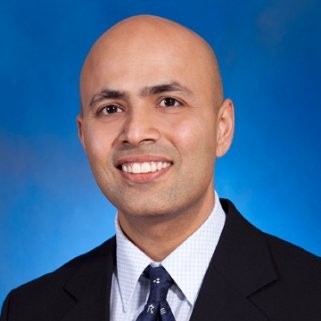
Vijay Manghnani
Author

Vijay Manghnani

Vijay Manghnani is Managing Partner, CIO and CUO at King Ridge Capital Advisors, working at the intersection of insurance, reinsurance, and capital markets. Previously SVP and Head of Risk & Analytics for Insurance Linked Securities at PIMCO, his work focuses on ILS, portfolio management, risk transfer, and catastrophe and climate risk.

Share this article

Help others discover this content.

Recent Posts

© 2026 King Ridge Capital Inc.. All Rights Reserved.