CAT Bonds: A Timely Solution for Asset Managers in an Era of Evolving Risks

Fixed income securities have long been a foundational building block of conservative investment strategies, providing stability and predictability. In recent years, consistently low bond yields, combined with escalating inflation and interest rates, along with increasing correlations with equities, have sparked concerns about bonds' capacity to effectively diversify portfolios and reduce risk.

ABSTRACT


Fixed Income securities have long been a foundational building block of conservative investment strategies, providing stability and predictability. In recent years, persistently low bond yields, coupled with rising inflation, rising interest rates, and heightened correlations with equities, have raised questions regarding their ability to provide effective diversification and mitigate risk. Portfolio managers and asset allocators, in response to these market dynamics, continue their search for alternative sources of yield and diversification. CAT Bonds (Catastrophe Bonds), a subset of Insurance Linked Securities (ILS), may be a compelling yet overlooked asset class.


This paper provides an examination of CAT Bonds, comparing their performance to traditional as well as alternative fixed-income asset classes. It also explores reasons fund managers and asset allocators have been slow to embrace the significant virtues of CAT Bonds. Additionally, it provides evidence of why CAT Bonds should be re-examined as a core component of any broadly diversified fixed-income strategy.


REVIEW OF THE CAT BOND MARKET AND BARRIERS TO ITS ADOPTION


The inception of the CAT Bond market occurred in the mid-1990s in the aftermath of Hurricane Andrew. At that time, Andrew was the costliest hurricane to ever make landfall in the U.S. This event, and others, emphasized the limitations of the existing reinsurance market. CAT Bonds were developed to provide a bridge between insurers and the capital markets. Despite their potential, CAT Bonds have not been broadly utilized by bond managers and multi-sector asset managers.


Several obstacles have hindered the wider adoption of CAT Bonds, including infrastructure support costs, liquidity constraints, and complexity. There may be more subtle explanations for the lack of integration within traditional portfolios. A principal obstacle to the wider utilization of CAT Bonds may be the fact that their risk characteristics and the methodologies utilized to evaluate those risks do not align with traditional bonds.


Conventional bonds are typically driven by credit or duration risks. CAT Bonds derive their returns from insurance underwriting risks associated with natural disasters. The evaluation of these risks is a departure from traditional fixed-income models. It is for that reason that many managers view CAT Bonds as being unconventional and difficult to integrate within a fixed-income mandate.


CAT Bonds also lack assimilation with widely utilized and recognized fixed-income benchmarks. The Swiss Re CAT Bond Index, used to benchmark the performance of this particular asset class, is not widely recognized within mainstream portfolio performance analytics. Those who are managing specific benchmark-related mandates may find this disconnect challenging.


Additionally, CAT Bonds have traditionally been utilized by alternative and hedge fund managers, leaving traditional bond fund managers unfamiliar with their potential within multi-sector bond portfolios. The lack of peer utilization by institutional asset managers has also played a role in perpetuating skepticism around CAT Bonds.


Lastly, concerns about concentration risk and significant drawdowns from correlated natural disasters, such as multiple hurricanes in the same season, remain a challenge. Although diversification across perils and geographies may help mitigate risk, tail-risk concerns may remain an obstacle to wider adoption among fund managers.


CAT BONDS VS. TRADITIONAL AND ALTERNATIVE FIXED INCOME ASSET CLASSES


CAT Bonds have several unique characteristics that may make them an attractive inclusion in fixed-income portfolios. CAT Bonds are particularly compelling when considering their risk, return, and correlations to traditional and alternative fixed-income assets. Table 1 compares the performance of CAT Bonds to traditional and alternative fixed-income assets from 2005 to 2025.
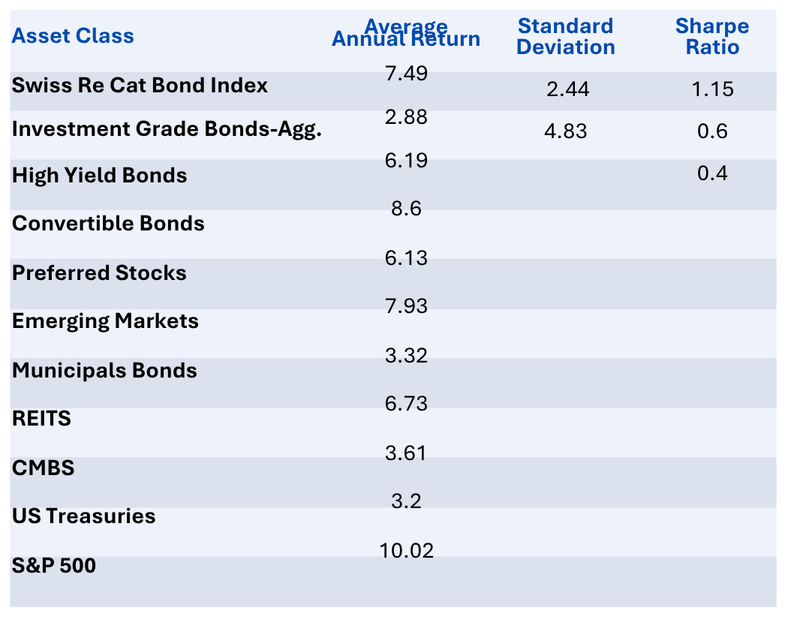


Table 1: Average Annual Returns & Volatility (20 yrs. as of 01/01/2025). Source - Bloomberg.


Table 1: Average Annual Returns & Volatility (20 yrs. as of 01/01/2025). Source - Bloomberg.


The data reveals several key observations. First, CAT Bonds display lower volatility relative to high-yield bonds, preferred stocks, and convertible securities. CAT Bonds provide a more stable option for multi-asset portfolios. CAT Bonds also exhibit a remarkably high Sharpe ratio, highlighting the fact that their returns are driven by non-financial risks, thus offering an attractive risk/return profile when compared to traditional fixed-income assets.


The low correlations between CAT Bonds and other fixed-income and equity instruments, as shown in Table 2, accentuate their value as a diversifier in portfolios attempting to mitigate risk.
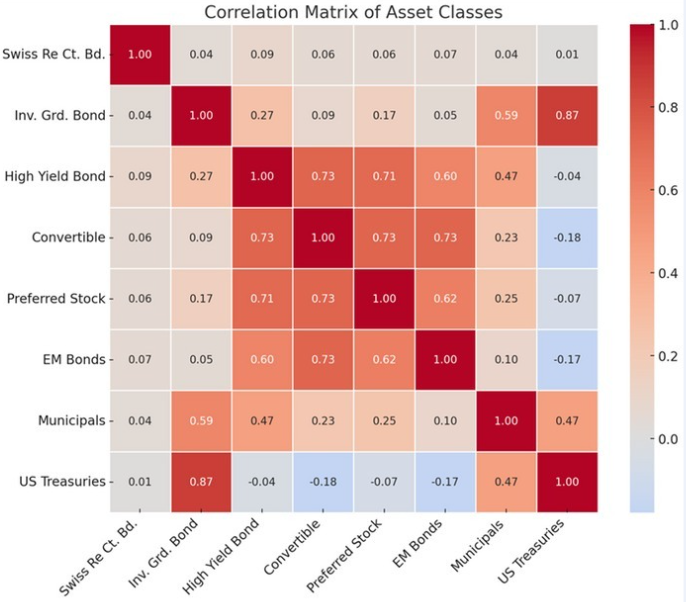
 

Table 2: Correlation Matrix (20 yrs. as of 01/01/2025). Source - Bloomberg.

Table 2: Correlation Matrix (20 yrs. as of 01/01/2025). Source - Bloomberg.


Correlations and Diversification Challenges   


In recent years, fixed-income markets have faced challenges that have compromised their traditional role as diversifiers against equity market volatility. Increasing correlations between equities and bonds, particularly during periods of synchronized global growth and high inflation, have undermined the ability of traditional bonds to provide effective diversification.


Additionally, CAT Bonds derive their returns from natural disaster risks, which historically have been largely uncorrelated with financial markets. As the chart above illustrates, CAT Bonds exhibit low correlations to traditional fixed-income asset classes. This provides a unique diversification benefit, enhancing their attractiveness for portfolios seeking to reduce exposure to the growing risks associated with traditional bond allocations.


Conclusion


CAT Bonds may offer a unique opportunity for bond fund and multi-asset fund managers to increase portfolio diversification, reduce correlations, and achieve enhanced risk-adjusted returns. With barriers to the incorporation of CAT Bonds into traditional portfolios, such as research infrastructure costs and limited in-house expertise, gradually being overcome, the rapid evolution of the market suggests that CAT Bonds should be a key component of a resilient, diversified fixed-income portfolio.


As fixed-income markets evolve with changing economic conditions, bond managers should reevaluate their strategies and embrace innovative asset classes like CAT Bonds.


Disclosures and Regulatory Considerations


This material has been prepared by King Ridge Capital Advisors, LLC ("King Ridge"), an SEC-registered investment adviser. It is provided for informational and educational purposes only. It does not constitute investment advice, an offer to sell, or the solicitation of an offer to buy any security or investment product.


The views and opinions expressed are those of the author as of the date of writing and do not necessarily reflect the views of King Ridge as a firm. The information and opinions presented are subject to change without notice. Registration with the SEC does not imply a certain level of skill or training.


Past performance is not indicative of future results. Investment in insurance-linked securities (ILS), including catastrophe bonds, involves substantial risks, including the potential loss of principal. CAT Bonds are subject to unique risks, including event risk, model risk, and basis risk. Returns may be volatile and are not guaranteed.


Any performance data referenced, including that of the Swiss Re Global CAT Bond Index, is provided for illustrative purposes only. Index returns do not represent actual portfolio returns or investable products and may differ from the performance of CAT Bond strategies managed by King Ridge. Indexes are unmanaged and are not available for direct investment. Data sources include Swiss Re, Bloomberg, and Artemis; King Ridge makes no representations or warranties regarding the accuracy or completeness of such third-party information.


Redistribution or reproduction of this material, in whole or in part, without prior written consent from King Ridge is strictly prohibited.


blogHeaderImage
March 03, 2025

CAT Bonds: A Timely Solution for Asset Managers in an Era of Evolving Risks

Blog Summary

Quick overview of the article

Fixed income securities have long been a foundational building block of conservative investment strategies, providing stability and predictability. In recent years, consistently low bond yields, combined with escalating inflation and interest rates, along with increasing correlations with equities, have sparked concerns about bonds' capacity to effectively diversify portfolios and reduce risk.

ABSTRACT


Fixed Income securities have long been a foundational building block of conservative investment strategies, providing stability and predictability. In recent years, persistently low bond yields, coupled with rising inflation, rising interest rates, and heightened correlations with equities, have raised questions regarding their ability to provide effective diversification and mitigate risk. Portfolio managers and asset allocators, in response to these market dynamics, continue their search for alternative sources of yield and diversification. CAT Bonds (Catastrophe Bonds), a subset of Insurance Linked Securities (ILS), may be a compelling yet overlooked asset class.


This paper provides an examination of CAT Bonds, comparing their performance to traditional as well as alternative fixed-income asset classes. It also explores reasons fund managers and asset allocators have been slow to embrace the significant virtues of CAT Bonds. Additionally, it provides evidence of why CAT Bonds should be re-examined as a core component of any broadly diversified fixed-income strategy.


REVIEW OF THE CAT BOND MARKET AND BARRIERS TO ITS ADOPTION


The inception of the CAT Bond market occurred in the mid-1990s in the aftermath of Hurricane Andrew. At that time, Andrew was the costliest hurricane to ever make landfall in the U.S. This event, and others, emphasized the limitations of the existing reinsurance market. CAT Bonds were developed to provide a bridge between insurers and the capital markets. Despite their potential, CAT Bonds have not been broadly utilized by bond managers and multi-sector asset managers.


Several obstacles have hindered the wider adoption of CAT Bonds, including infrastructure support costs, liquidity constraints, and complexity. There may be more subtle explanations for the lack of integration within traditional portfolios. A principal obstacle to the wider utilization of CAT Bonds may be the fact that their risk characteristics and the methodologies utilized to evaluate those risks do not align with traditional bonds.


Conventional bonds are typically driven by credit or duration risks. CAT Bonds derive their returns from insurance underwriting risks associated with natural disasters. The evaluation of these risks is a departure from traditional fixed-income models. It is for that reason that many managers view CAT Bonds as being unconventional and difficult to integrate within a fixed-income mandate.


CAT Bonds also lack assimilation with widely utilized and recognized fixed-income benchmarks. The Swiss Re CAT Bond Index, used to benchmark the performance of this particular asset class, is not widely recognized within mainstream portfolio performance analytics. Those who are managing specific benchmark-related mandates may find this disconnect challenging.


Additionally, CAT Bonds have traditionally been utilized by alternative and hedge fund managers, leaving traditional bond fund managers unfamiliar with their potential within multi-sector bond portfolios. The lack of peer utilization by institutional asset managers has also played a role in perpetuating skepticism around CAT Bonds.


Lastly, concerns about concentration risk and significant drawdowns from correlated natural disasters, such as multiple hurricanes in the same season, remain a challenge. Although diversification across perils and geographies may help mitigate risk, tail-risk concerns may remain an obstacle to wider adoption among fund managers.


CAT BONDS VS. TRADITIONAL AND ALTERNATIVE FIXED INCOME ASSET CLASSES


CAT Bonds have several unique characteristics that may make them an attractive inclusion in fixed-income portfolios. CAT Bonds are particularly compelling when considering their risk, return, and correlations to traditional and alternative fixed-income assets. Table 1 compares the performance of CAT Bonds to traditional and alternative fixed-income assets from 2005 to 2025.


Table 1: Average Annual Returns & Volatility (20 yrs. as of 01/01/2025). Source - Bloomberg.


Table 1: Average Annual Returns & Volatility (20 yrs. as of 01/01/2025). Source - Bloomberg.


The data reveals several key observations. First, CAT Bonds display lower volatility relative to high-yield bonds, preferred stocks, and convertible securities. CAT Bonds provide a more stable option for multi-asset portfolios. CAT Bonds also exhibit a remarkably high Sharpe ratio, highlighting the fact that their returns are driven by non-financial risks, thus offering an attractive risk/return profile when compared to traditional fixed-income assets.


The low correlations between CAT Bonds and other fixed-income and equity instruments, as shown in Table 2, accentuate their value as a diversifier in portfolios attempting to mitigate risk.


Table 2: Correlation Matrix (20 yrs. as of 01/01/2025). Source - Bloomberg.

Table 2: Correlation Matrix (20 yrs. as of 01/01/2025). Source - Bloomberg.


Correlations and Diversification Challenges   


In recent years, fixed-income markets have faced challenges that have compromised their traditional role as diversifiers against equity market volatility. Increasing correlations between equities and bonds, particularly during periods of synchronized global growth and high inflation, have undermined the ability of traditional bonds to provide effective diversification.


Additionally, CAT Bonds derive their returns from natural disaster risks, which historically have been largely uncorrelated with financial markets. As the chart above illustrates, CAT Bonds exhibit low correlations to traditional fixed-income asset classes. This provides a unique diversification benefit, enhancing their attractiveness for portfolios seeking to reduce exposure to the growing risks associated with traditional bond allocations.


Conclusion


CAT Bonds may offer a unique opportunity for bond fund and multi-asset fund managers to increase portfolio diversification, reduce correlations, and achieve enhanced risk-adjusted returns. With barriers to the incorporation of CAT Bonds into traditional portfolios, such as research infrastructure costs and limited in-house expertise, gradually being overcome, the rapid evolution of the market suggests that CAT Bonds should be a key component of a resilient, diversified fixed-income portfolio.


As fixed-income markets evolve with changing economic conditions, bond managers should reevaluate their strategies and embrace innovative asset classes like CAT Bonds.


Disclosures and Regulatory Considerations


This material has been prepared by King Ridge Capital Advisors, LLC ("King Ridge"), an SEC-registered investment adviser. It is provided for informational and educational purposes only. It does not constitute investment advice, an offer to sell, or the solicitation of an offer to buy any security or investment product.


The views and opinions expressed are those of the author as of the date of writing and do not necessarily reflect the views of King Ridge as a firm. The information and opinions presented are subject to change without notice. Registration with the SEC does not imply a certain level of skill or training.


Past performance is not indicative of future results. Investment in insurance-linked securities (ILS), including catastrophe bonds, involves substantial risks, including the potential loss of principal. CAT Bonds are subject to unique risks, including event risk, model risk, and basis risk. Returns may be volatile and are not guaranteed.


Any performance data referenced, including that of the Swiss Re Global CAT Bond Index, is provided for illustrative purposes only. Index returns do not represent actual portfolio returns or investable products and may differ from the performance of CAT Bond strategies managed by King Ridge. Indexes are unmanaged and are not available for direct investment. Data sources include Swiss Re, Bloomberg, and Artemis; King Ridge makes no representations or warranties regarding the accuracy or completeness of such third-party information.


Redistribution or reproduction of this material, in whole or in part, without prior written consent from King Ridge is strictly prohibited.

Neil Hause
Author

Neil Hause

Neil Hause is a Partner and Executive at King Ridge Capital Advisors with more than 40 years of experience in financial services. His work focuses on insurance-linked securities (ILS) and casualty risk investment strategies for institutional investors, RIAs, broker-dealers, pensions, endowments, and family offices.

Share this article

Help others discover this content.

Recent Posts

© 2026 King Ridge Capital Inc.. All Rights Reserved.